
Wellness Tourism Is Booming. Is Your Hotel Ready?
Guest expectations in hospitality are evolving, and one trend has quickly moved from niche to mainstream: wellness tourism. At its core, wellness tourism is travel with the purpose of maintaining or improving physical, mental, and spiritual well-being. This can mean a dedicated trip, for instance, a retreat, spa vacation, or yoga getaway. It can also mean weaving wellness into a traditional stay, whether through a workout in the hotel gym, a restorative class, a massage, or a nourishing meal onsite.
What was once considered exclusive or high-end is now shaping demand across the entire spectrum of hotels. From luxury resorts to extended-stay properties serving families and business travelers, guests no longer see wellness as an optional perk. They expect it to be part of every stage of their stay, whether visible or subtle, and integrated seamlessly into the overall experience.
The Rising Demand for Wellness in Hospitality
Over the past decade, and especially post-pandemic, travelers have sought experiences that counterbalance a fast-paced, digitally saturated lifestyle. They want environments that support their full range of needs: sometimes active and social, other times restful and restorative.
The numbers tell a compelling story:
- The global wellness tourism market is projected to reach $2.1 trillion by 2030, growing at a CAGR of 12.4%. (Grand View Research)
- In terms of revenue, North America accounted for 39.7% of the global wellness tourism market in 2022. (Grand View Research)
- Emerging trends like “soft travel” (focused on self-discovery, simplicity, and mental rejuvenation), digital detoxing, and sleep tourism are accelerating rapidly.
It’s worth noting that travelers seeking wellness while away from home are not a single demographic. They include families, professionals, and leisure guests who want healthier, more mindful experiences and choose to add wellness activities to otherwise traditional trips.
Designing for Human Needs, Not Just Amenities
Too often, hotels equate wellness with surface-level additions such as a spa, yoga room, or new smoothie menu. While these additions can enhance a stay, they only scratch the surface. A truly human-centered approach to wellness tourism looks beyond amenities to the entire guest journey.
As a builder, we focus on how the physical environment supports that journey. We create spaces that are flexible, intuitive, and durable so they meet different guest needs throughout the day. For example:
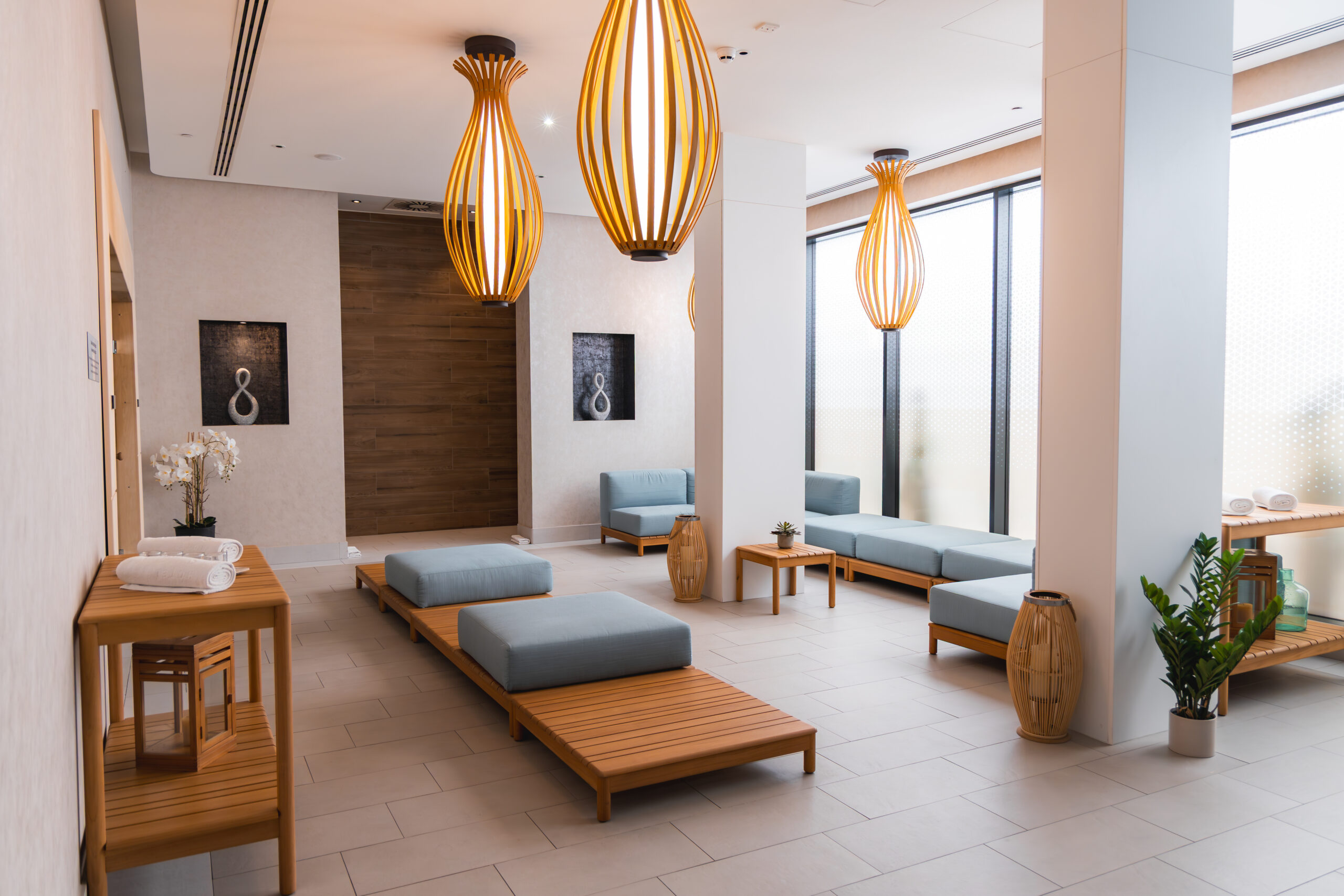
- A quiet lounge designed to serve as a meditation room in the morning, a workspace during the daytime, and a wind-down area in the evening.
- Transitions between active and restorative areas that feel natural, such as moving from a bustling lobby to a serene courtyard without disruption.
These construction decisions shape how guests experience wellness throughout their stay. They also create opportunities for memorable moments that guests will want to share, whether capturing a photo of their favorite space and sharing it with their followers on social media or telling their family and friends about how seamless and comfortable their stay felt.
How Hotels Are Responding Across Segments
Luxury properties continue to push boundaries. It’s no longer uncommon to see hydrotherapy circuits, sleep optimization suites, and plant-forward dining at hotels in this category. We’re also seeing mid-tier and business-focused hotels integrate wellness as well, through:
- Multi-use fitness and movement rooms.
- Healthy grab-and-go options for busy travelers.
- Family-friendly relaxation zones.
- Digital detox lounges or focus pods.
These initiatives appeal directly to professionals, parents, and casual vacationers who want to return home feeling better than when they arrived.
Building and Renovating with Wellness in Mind
For developers, hotel operators, and property owners, the opportunity lies not just in what is offered but in how it is built. Construction and renovation decisions directly impact how guests experience wellness. This includes:
- Flexible spaces that adapt to different rhythms of use.
- Smart transitions between social and private areas, supported by layout and finishes.
- Natural materials and lighting installed to calm rather than overwhelm.
- Outdoor environments constructed to encourage pause, movement, and connection.
- Integrated sustainability measures built into systems and finishes that align with guest values.
Partnering with the right general contractor makes the difference between wellness as a design concept and wellness as a lived guest experience. From air and water filtration systems to acoustics, lighting, and material choices, Level 3 Construction knows how to translate wellness-driven ideas into practical, high-performing environments. As a leading hotel construction, renovation, and restoration company, we bring deep expertise in ground-up builds, full-scale renovations, and historic hotel restorations. Our team stays ahead of industry trends so every property we deliver is positioned for long-term success.
The ROI of Human-Centered Wellness
Wellness isn’t just an amenity. It is a differentiator that drives measurable returns. Hotels offering a holistic guest experience consistently see:
- Higher ADRs (average daily rates).
- Stronger brand loyalty and guest satisfaction.
- A more resilient position in a competitive market.
And because human-centered wellness aligns with broader movements like sustainability and regenerative travel, it can future-proof investments for decades to come.
Designing for Tomorrow’s Traveler
The wellness tourism boom is not about chasing the latest fitness craze or spa menu. It’s about creating spaces and experiences that respect the full spectrum of human needs: choice, comfort, convenience, recovery, and connection.
The hotels that thrive will not just offer wellness; they’ll embody it in every detail of their guest journey. If your next project involves new construction, full-scale renovation, or restoring a historic property, we can help you build a hotel that is ready for tomorrow’s traveler.